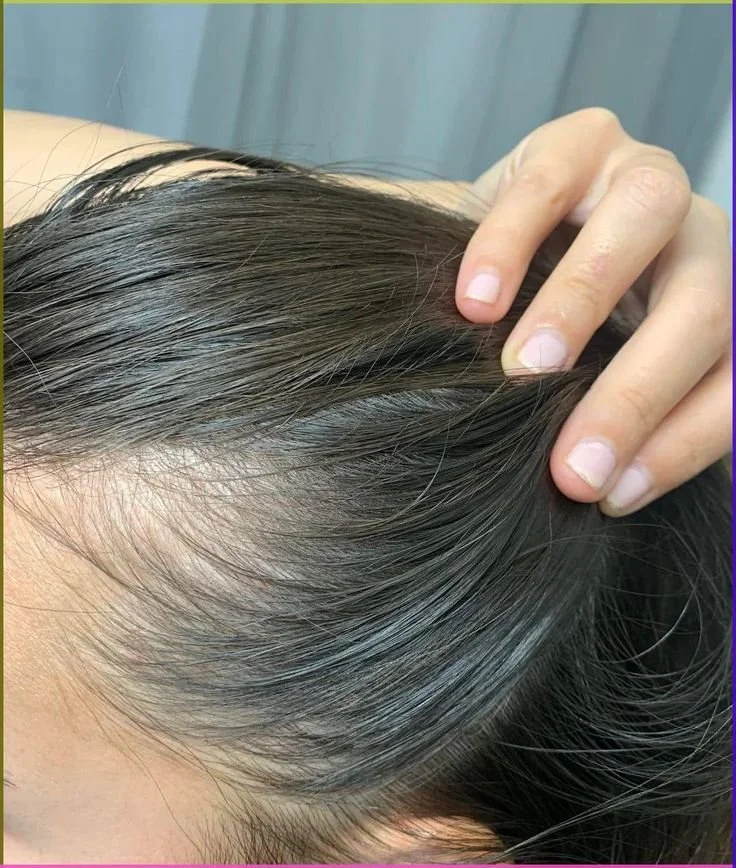
A treatment should not leave the scalp persistently sore
Minoxidil can be useful for pattern hair loss, but itching, burning or a new rash is not proof that it is working. A scalp reaction deserves assessment, particularly when it is affecting sleep, spreading beyond the application area or making a treatment difficult to continue. Simply adding PRP or another hair product does not identify the cause.
At The London PRP Clinic, a hair assessment can review the underlying hair loss alongside the scalp symptoms and treatments already used. The immediate priority with an inflamed scalp is to understand the reaction and settle it, rather than press ahead with an injection course.
Arrange a hair and scalp assessment.
Irritation and allergy are different problems
Contact dermatitis is inflammation caused by something touching the skin. An irritant reaction and an allergic reaction can look similar. Timing, the appearance of the rash, other products and the area affected all matter. Itching alone does not establish an allergy to minoxidil itself.
The complete formulation matters too. A product contains more than its active medicine. For example, the UK leaflet for Regaine for Men Extra Strength Scalp Foam lists alcohol and other ingredients that can cause local skin reactions. Foam is therefore not automatically irritation-free. A change of brand or formulation is a clinical decision when there has been a significant reaction, not a guarantee of solving it.
A history of eczema, psoriasis or dandruff may complicate the picture. A clinician may find an existing scalp condition, a reaction to a hair dye or styling product, or more than one problem at the same time. Treating every flake as ordinary dandruff can leave the actual trigger in place.
What to do when symptoms start
Gloucestershire Hospitals' minoxidil information advises stopping treatment if side effects develop. Follow the leaflet supplied with your particular product and seek advice from a pharmacist or clinician. Do not keep applying it to a sore or broken scalp in an attempt to push through the reaction.
Keep the packaging or a photograph of its full ingredient list. The concentration, formulation, frequency of application and date symptoms began can help the review. So can a record of recent changes to shampoo, dye, oils, styling products or other scalp medicines. Clear photographs taken before the rash changes can be useful, but they do not always replace examining the scalp.
Do not start several new treatments at once to compensate. That can make it harder to identify what is helping or causing further irritation. A clinician can advise which existing products should pause and what can safely be used while the scalp recovers.
When a routine hair appointment is not enough
Get urgent medical advice for rapidly worsening redness, marked pain, discharge or feeling unwell. Call 999 for swelling of the lips, mouth, tongue or throat, breathing difficulty or collapse. Do not wait for a routine hair consultation if a severe reaction is developing.
The minoxidil leaflet also advises stopping and seeking medical advice for symptoms such as chest pain, a fast heartbeat, faintness or dizziness. A scalp product is still a medicine. Symptoms outside the scalp should not be dismissed as an expected shedding phase.
How the diagnosis is made
An assessment usually starts with the history and examination. The clinician considers whether the reaction follows the application pattern, whether inflammation extends to the ears or face, and whether there are signs of another scalp disorder. They also assess the type of hair loss, because not every form of shedding is pattern hair loss and not every form benefits from the same treatment.
When allergic contact dermatitis remains a possibility, a dermatologist may recommend patch testing. NHS guidance describes this as the best way to test for contact allergens. It is a specialist process with readings over several days, not a home trial of applying the product to an already irritated area. A negative result to one ingredient does not settle every possible cause of a scalp reaction.
Discuss a treatment reaction with the clinic. Tell the team that the enquiry concerns an irritated scalp so the appropriate assessment can be arranged.
Settling the scalp before rebuilding the hair plan
Treatment depends on the diagnosis. Avoiding an identified trigger is an important part of contact dermatitis care. A pharmacist or clinician may advise suitable moisturising treatment or prescribe a short course of a topical anti-inflammatory medicine when appropriate. The strength, vehicle and duration should fit the scalp condition and the individual.
Do not combine prescription scalp treatments with minoxidil without advice. The product leaflet contains cautions about other scalp medicines, and using several products on inflamed skin is not a substitute for a clear plan. The aim is comfortable, healthy scalp skin and a sustainable treatment approach.
Once the reaction has settled, the hair plan can be reconsidered. Options may include a different formulation, another suitable medical treatment, monitoring or an assessment of whether PRP has a reasonable role. Oral minoxidil is not an automatic substitute for a topical reaction. It needs its own prescribing assessment and discussion of risks.
Where PRP fits, and where it does not
PRP is not a treatment for a suspected contact allergy. Nor does an itchy scalp establish that injections are the next best hair treatment. An actively inflamed or damaged treatment area needs clinical review before deciding whether an elective procedure is appropriate.
A consultation should separate the questions: what is causing the scalp reaction, what is causing the hair loss, and which treatment is suitable once those are understood? If PRP is discussed, the expected benefit, uncertainty, treatment burden and alternatives should be explained for the actual diagnosis. A consultation does not commit you to a course.
Explore an individual hair treatment assessment, or contact the clinic about the right appointment. The team can confirm the format and availability when you enquire.
Common questions
Is itching a sign that minoxidil is working?
No. Itching can be a side effect or a sign of another scalp condition. Persistent symptoms need review rather than being treated as evidence of benefit.
Can foam still irritate the scalp?
Yes. Formulations differ, but foam can still contain ingredients that cause local reactions. A product switch is not guaranteed to solve the problem.
Does a rash prove I am allergic to minoxidil?
No. Irritation, allergy to an ingredient and an unrelated scalp disorder can look similar. Assessment, and sometimes specialist patch testing, helps distinguish them.
Should I keep applying it to broken skin?
No. Follow the product leaflet, stop when side effects develop and obtain professional advice rather than applying it to an inflamed or damaged scalp.
Can I book PRP instead?
A hair consultation can review options, but PRP does not diagnose or treat a contact allergy. The scalp reaction should be assessed before an injection plan is considered.
Is oral minoxidil the straightforward alternative?
No. It needs a separate prescribing assessment and risk discussion. A reaction to a topical product does not by itself establish suitability for an oral medicine.
Sources
- Gloucestershire Hospitals NHS: minoxidil information.
- NHS: diagnosing contact dermatitis and patch testing.
- NHS: contact dermatitis treatment.
- UK patient leaflet: Regaine for Men Extra Strength Scalp Foam.
General information, not an individual diagnosis. Follow the leaflet for your own medicine and seek advice about new or persistent symptoms.