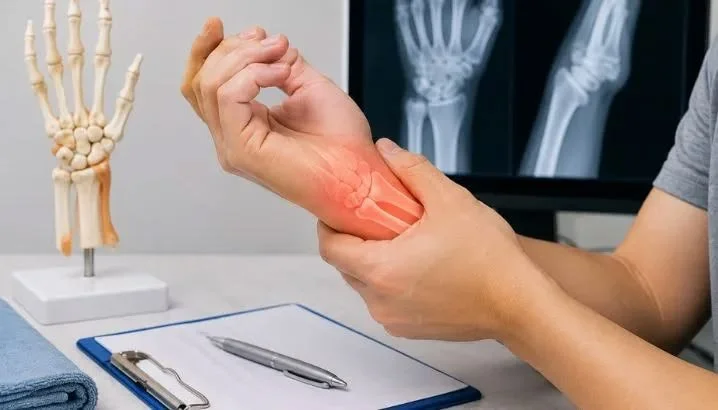
Bone and joint pain can overlap. Contextual photograph with a pain highlight, not a diagnostic image of osteomalacia.
Persistent bone pain and difficulty rising from a chair can sometimes reflect osteomalacia, a disorder in which adult bone does not mineralise properly. Vitamin D or calcium deficiency is a common cause, but not the only one. Symptoms may develop gradually and can overlap with joint disease, muscle problems and other conditions. A low vitamin D result alone does not establish the diagnosis.
For someone considering PRP for ongoing hip, knee or limb pain, the distinction matters. A local injection does not correct a general problem with bone mineralisation. A careful assessment can identify when the priority is blood tests, imaging, nutritional treatment or specialist care rather than an injection. Severe hip pain after an injury or inability to bear weight needs emergency assessment, not a routine appointment.
What is osteomalacia?
Bone is living tissue. It needs an appropriate supply and handling of minerals, including calcium and phosphate, to become strong. Osteomalacia means that newly formed bone matrix is not mineralised normally. The result can be bone pain, muscle weakness and increased vulnerability to fractures, sometimes after only minor trauma.
Vitamin D helps regulate calcium and phosphate. A prolonged deficiency can contribute to osteomalacia, particularly when calcium intake is also inadequate. The term is not interchangeable with an isolated vitamin D blood result. Many people with a low result do not have established osteomalacia, and pain still needs assessment on its own merits.
Which symptoms deserve attention?
NHS information describes pain in areas such as the back, shoulders, ribs, pelvis and legs. Muscle weakness can make stairs, walking or getting out of a chair unusually difficult. Some people notice a change in their walking pattern, muscle cramps or fractures following a minor accident. Symptoms can be diffuse rather than confined to one joint.
These symptoms do not form a reliable home diagnostic test. Pain on walking may come from a joint, tendon, nerve, blood vessel or bone. Weakness can have several causes too. The clinical value lies in recognising the pattern, examining the affected areas and deciding which investigations are justified, rather than attributing all discomfort to a vitamin deficiency.
How is it different from osteoporosis?
Osteoporosis and osteomalacia can both increase fracture risk, but they are different disorders. Osteoporosis concerns reduced bone strength and is often silent until a fracture occurs. Osteomalacia concerns inadequate mineralisation. The conditions can coexist, and neither is ruled out simply because someone is active, relatively young or has no previous fracture.
A bone density scan can be helpful in a fracture-risk assessment, but a low density result does not by itself explain the cause of bone weakness. Blood results, symptoms, medical history and sometimes other imaging are needed. Treatment aimed at osteoporosis should not be assumed to correct an unrecognised mineralisation disorder.
Why can vitamin D or calcium become low?
Low sunlight exposure, limited dietary intake and problems absorbing nutrients can contribute. In the UK, sunlight is not strong enough for adequate vitamin D production during the autumn and winter. People who spend little time outdoors, cover most of their skin or have darker skin may be at increased risk of vitamin D deficiency throughout the year.
Diet is only one part of the assessment. Conditions affecting absorption, including coeliac disease, and previous weight-loss surgery can be relevant. Kidney or liver disease can affect vitamin D handling. Some medicines also influence bone and mineral metabolism. Prescribed medicines should not be stopped without advice; their role should be reviewed alongside the rest of the clinical picture.
Can phosphate problems cause osteomalacia too?
Yes. Osteomalacia is not always explained by inadequate vitamin D intake. Persistent phosphate loss or other disorders of mineral metabolism may require a different investigation and treatment plan. Some causes are uncommon, which is why unexplained abnormalities or symptoms that do not respond as expected deserve review rather than repeated supplements without a diagnosis.
The clinical history should include prescribed medicines, supplements and previous treatments. Repeated intravenous iron treatment can be relevant in some cases of low phosphate. That does not mean iron treatment should be avoided when indicated. It means the exact preparation, timing, symptoms and blood results belong in a considered medical review.
What happens during assessment?
An assessment brings together where the pain is felt, how long it has been present, what makes it worse and whether strength or walking has changed. Previous fractures, falls, dietary restrictions, bowel symptoms, kidney disease and medication history can all affect the next step. Examination may assess tenderness, joint movement, gait and muscle strength.
For clients seeking advice about an injection, a wider pattern of pain or weakness is important context. An injection-focused consultation should not obscure a possible general bone-health problem. Depending on the findings, the appropriate next step may be a GP assessment, in-person examination or a specialist opinion. A remote conversation cannot exclude a fracture or fully assess gait and bone tenderness.
Which blood tests may be useful?
NHS guidance describes checking vitamin D and calcium when osteomalacia is suspected. Depending on the history and initial findings, assessment may also include phosphate, alkaline phosphatase, kidney function and parathyroid hormone. Urine testing is sometimes needed. These are selected investigations, not a standard panel that every person with an ache needs.
No single blood result is specific to osteomalacia. Calcium may be maintained within the laboratory range despite a problem elsewhere in mineral regulation. Alkaline phosphatase can rise for reasons other than bone disease. The combination of results and symptoms is more informative than a highlighted value viewed in isolation. Laboratories may use different ranges and units, so the original report matters.
When is imaging needed?
Imaging may be required when there is a suspected fracture, persistent focal pain or uncertainty about the diagnosis. X-rays and, in selected circumstances, other bone imaging can help identify changes or complications. A clinician decides which test addresses the specific question. Imaging is not a substitute for interpreting the medical history and blood results.
A new painful area should not automatically be labelled as part of an existing vitamin D problem. In particular, new hip or groin pain with difficulty bearing weight needs assessment for a fracture. Increasing exercise to test whether the pain settles is not appropriate when a bone injury is possible.
What does treatment involve?
Treatment depends on the cause. Nutritional osteomalacia may need prescribed vitamin D and calcium support alongside changes to intake. Problems with absorption, kidney disease or phosphate handling may need specialist treatment. The dose, formulation, duration and follow-up should fit the individual findings rather than a general supplement routine copied from someone else.
A maintenance supplement used to prevent deficiency is not the same as a treatment course for established disease. Equally, high-dose treatment should not be started simply because pain is present. Too much vitamin D can cause harmful calcium levels and damage the kidneys and heart. Kidney disease and some other conditions make individual advice especially important.
What can PRP do for osteomalacia?
PRP is not an established treatment for osteomalacia and does not replace vitamin D, calcium or phosphate when these require correction. Evidence about injecting a particular joint cannot be transferred to a metabolic bone disorder. A joint may also have a separate problem, but that needs its own diagnosis and a discussion of suitable options.
For example, NICE guidance on PRP for knee osteoarthritis describes limited-quality evidence of benefit and requires special governance, consent and audit or research arrangements. That guidance is about knee osteoarthritis, not osteomalacia. It should not be used to suggest that PRP strengthens undermineralised bone or treats the underlying cause of widespread bone pain.
How is recovery followed?
Follow-up considers symptoms, walking and strength as well as blood results. Some improvement may occur within weeks when a correctable deficiency is treated, but full recovery can take much longer. The timetable depends on the cause, severity, fractures and other health conditions. A fixed recovery promise would not be reliable.
Persistent pain, continuing weakness or an unexpected blood-test pattern should prompt reassessment. More of the same supplement is not always the answer. The diagnosis, dose, absorption, adherence and possible coexisting disease may need review. Once it is safe, activity and rehabilitation can be adapted to restore function without overloading a vulnerable bone.
When is urgent care needed?
Call 999 or attend A&E for severe hip pain after a fall or injury, inability to walk or put weight on the leg, or tingling or loss of feeling after an injury. Do not drive yourself. A possible hip fracture needs hospital assessment rather than waiting for a private blood test or an injection consultation.
Sudden severe hip pain without an injury, or a hot swollen hip with fever or feeling generally unwell, needs urgent medical advice through an urgent GP appointment or NHS 111. These symptoms should not be assumed to be osteomalacia. For persistent but non-urgent bone pain or weakness, arrange a clinical assessment so that the cause and appropriate next step can be considered.
Discuss a non-urgent assessment before considering PRP.
Frequently asked questions
Does a low vitamin D result mean I have osteomalacia?
No. A low result can indicate deficiency, but osteomalacia is a clinical diagnosis involving the wider picture. Symptoms, other blood results and sometimes imaging help determine whether bone mineralisation is affected. The purpose of review is to treat a genuine deficiency while avoiding an unsupported explanation for every symptom.
Can osteomalacia cause knee or hip pain?
Pain can involve the pelvis and legs, and may be felt around areas that people describe as joint pain. However, a painful knee or hip has many possible causes. Local tenderness, stiffness, swelling, injury and weakness need to be assessed rather than assuming that vitamin D explains the problem.
Is osteomalacia the same as arthritis?
No. Arthritis affects joints, while osteomalacia is a disorder of bone mineralisation. Someone can have both. Finding arthritis on an X-ray does not necessarily account for widespread pain or muscle weakness, and correcting a vitamin deficiency does not automatically treat an independent joint condition.
Should I take a high-dose vitamin D supplement while waiting?
Do not start a high-dose course without clinical advice. NHS prevention advice for most adults is to consider 10 micrograms daily during autumn and winter; some groups should consider this throughout the year. Established deficiency may need a different prescribed plan. Existing prescriptions, kidney health and other supplements must be taken into account.
Will an injection allow me to keep exercising normally?
An injection should not be used to bypass assessment of possible bone weakness or a fracture. Activity advice depends on the diagnosis and the site of pain. If bearing weight is painful or difficult, seek appropriate assessment rather than using pain relief to continue impact exercise through an undiagnosed injury.
What information is useful for a non-urgent consultation?
A clear symptom timeline, existing blood reports and imaging, current medicines and supplements, and any fracture history help make the consultation more focused. Relevant bowel conditions, dietary restrictions and previous surgery also matter. The aim is a coherent assessment with a reason for each next step, not simply a larger collection of tests.
Sources
StatPearls, Osteomalacia, updated September 2024
NICE, Platelet-rich plasma injections for knee osteoarthritis: recommendations