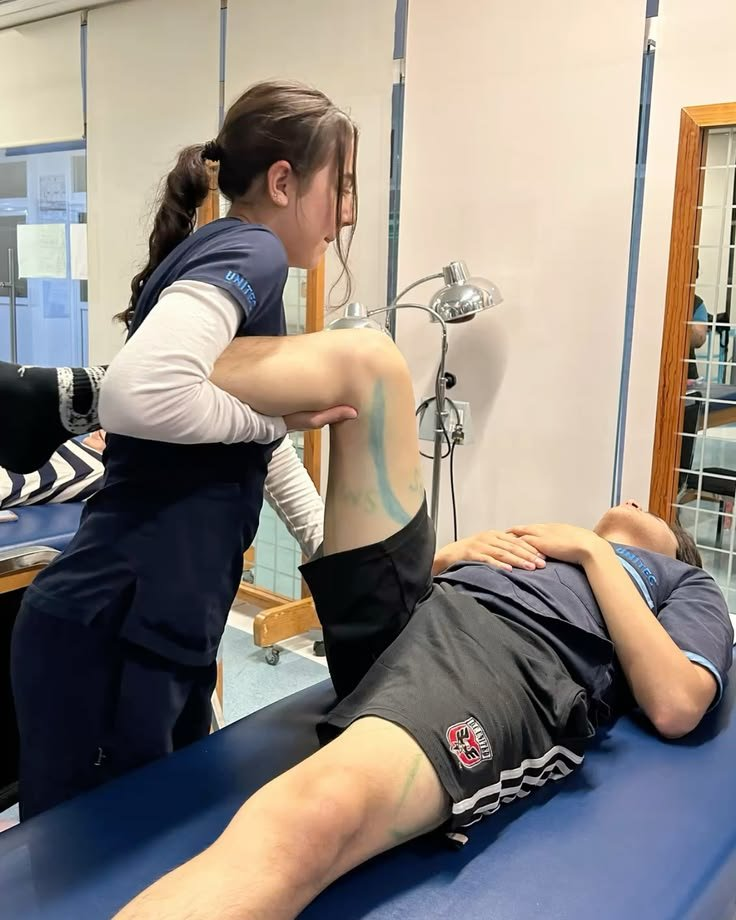
Pain a little below the inside of the knee can come from the pes anserine bursa, but it can also resemble a meniscus injury, ligament problem or stress fracture. The first decision is to identify the painful structure, not to choose a knee injection from the location of pain alone.
For confirmed pes anserine bursitis, treatment usually starts without an injection. PRP has been studied, but the evidence does not justify presenting it as automatically better than rehabilitation, a carefully selected steroid injection or other options.
What is the pes anserine bursa?
A bursa is a small fluid-containing sac that helps tissues move over one another. The pes anserine bursa lies on the inner side of the upper shin, near the attachment of three tendons. Irritation in this area can cause local tenderness and pain below the knee joint.
Symptoms may build gradually and worsen with stairs, exercise or getting up from a chair. The location is often lower than people expect when they describe knee pain. That is a useful clue, not a diagnosis you can confirm by pressing on the area yourself.
Knee osteoarthritis and bursitis can coexist. A scan showing wear in the joint does not prove that all your pain comes from inside it. An injection placed into the knee joint is also not the same procedure as treatment directed at a nearby bursa.
How is the diagnosis made?
The clinician should ask about the onset, training changes, pain location, swelling, previous injury and which movements bring symptoms on. Examination helps distinguish bursal or tendon-region pain from joint-line pain, instability and other causes.
AAOS notes that pes anserine symptoms can resemble a stress fracture, medial meniscus tear or medial collateral ligament sprain. Imaging is selected when it would answer a question raised by the history and examination. Ultrasound, X-ray or MRI are not interchangeable tests, and not every case requires all of them.
Discuss inner-knee pain with The London PRP Clinic. Ask for an assessment of the pain source before deciding whether any injection is appropriate.
What usually helps first?
Treatment is usually non-operative. Adjusting the activity that aggravates symptoms and working through an appropriate rehabilitation plan are common starting points. A physiotherapist may address flexibility, strength and loading rather than advise indefinite rest.
Pain-relief choices depend on your other conditions and medicines. An anti-inflammatory tablet is not suitable for everyone, and taking one because it appears on a general treatment list is not an individual recommendation. Discuss suitable options with a clinician or pharmacist.
The plan should account for coexisting knee osteoarthritis, alignment and the activities you want to recover. A busy professional returning to long walks and a runner increasing mileage may need different loading goals even if the diagnosis is similar.
What does the PRP evidence show?
A 2023 randomised comparative study enrolled 180 people with chronic pes anserine bursitis and compared corticosteroid injection, PRP and shockwave treatment. At its short follow-up points, the corticosteroid group had better pain and function outcomes than the PRP and shockwave groups. The groups also differed in baseline pain, and the study does not establish a lifetime best treatment.
A 2025 review of knee bursae describes promising PRP findings in selected settings but also heterogeneous treatment protocols and the need for better trials. These findings should be discussed together, not reduced to a claim that PRP regenerates every painful bursa or always avoids another treatment.
The honest question is whether a proposed injection has a reasonable role in your confirmed diagnosis after first-line care, what alternatives exist and how uncertainty affects the decision. Evidence for PRP in knee osteoarthritis cannot simply be transferred to a bursa outside the joint.
Is a steroid injection always the answer?
No. A result favouring a steroid injection in one study does not make it the right choice for every person. The clinician needs to consider the diagnosis, previous treatment, medicines, diabetes, infection risk and the specific injection site.
Ask what benefit is expected, how long it may last, what the risks are and what rehabilitation follows. An injection should fit into a plan, not replace one. If symptoms do not improve as expected, the diagnosis and treatment should be reassessed rather than repeating procedures automatically.
When should you seek urgent help?
A hot, markedly swollen knee with fever or feeling very unwell needs urgent assessment. A major injury, inability to bear weight, a locked knee or rapidly worsening symptoms also needs prompt medical review rather than an elective injection booking.
New calf swelling or pain should not simply be labelled bursitis. Seek urgent advice, particularly if it is one-sided; chest pain or breathlessness alongside it is an emergency.
What should you ask before paying for treatment?
Ask which structure is thought to cause the pain, what findings support that conclusion and whether imaging would change management. Then ask about non-injection care, the evidence for the proposed procedure and how progress will be measured.
Request the consultation, investigation and treatment costs separately, together with the likely follow-up arrangements. An enquiry does not confirm a diagnosis or reserve a procedure, and suitability and availability are checked individually.
Ask The London PRP Clinic in London about an assessment-led plan. A useful outcome is a treatment decision with clear reasons, including when PRP is not the preferred next step.
Sources and evidence limits
AAOS: pes anserine bursitis explains the anatomy, diagnostic alternatives and mostly non-operative treatment.
Gouda and colleagues: 2023 randomised comparison of steroid, PRP and shockwave provides short-term comparative results, not a universal treatment rule.
Hasan and colleagues: 2025 review of knee bursae describes the variable evidence for biological treatments and remaining research gaps.
Information checked 6 November 2026. This is general education, not a diagnosis or an assurance that an injection is suitable.