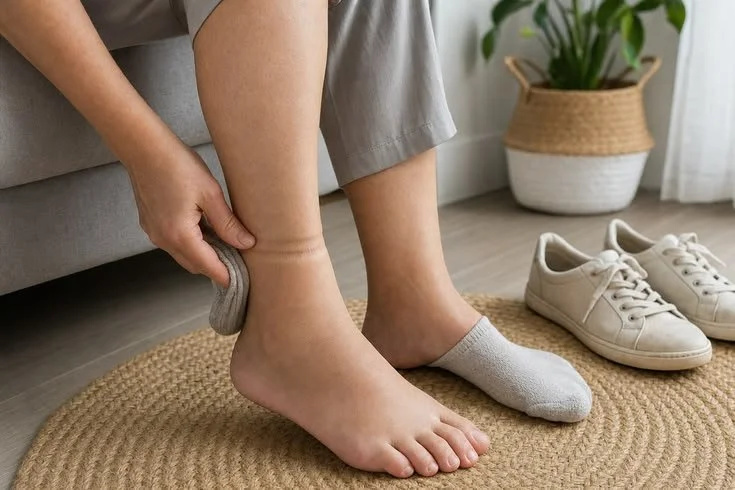
Recurring lower-leg symptoms during exercise need a diagnosis before treatment is selected. Illustrative photograph, not a diagnosis of compartment syndrome or a treatment image.
Pain and tightness that return at a similar point in a run can be more than a stubborn muscle strain. Chronic exertional compartment syndrome, often shortened to CECS, is one possible explanation. Symptoms usually develop during repeated activity and ease after stopping. That pattern deserves a diagnosis before an injection is chosen, particularly when exercise also brings numbness or difficulty moving the foot.
PRP is not an established treatment for relieving compartment pressure. Evidence about a tendon injury cannot simply be transferred to a condition involving the tissues around a muscle compartment. The useful starting point is to establish whether the symptoms reflect CECS, a bone stress injury, a tendon problem or another cause, and whether the pattern is safely non-urgent.
When does leg pain need emergency care?
Sudden, severe pain is different from the familiar discomfort that comes on with exercise and settles with rest. The NHS advises calling 999 or going to A&E for sudden, severe pain in any part of the body. Acute compartment syndrome can damage muscles and nerves and needs emergency surgery to release pressure. Do not drive yourself to A&E.
Concern is particularly important after an injury, a fracture or a tight cast or bandage. Severe pain with stretching, a tense or full muscle, tingling, numbness or weakness can occur. Numbness and paralysis can be late signs. Waiting for every symptom to appear, or for pain to become unbearable, is not a safe way to decide whether urgent assessment is needed.
A previous label of chronic compartment syndrome does not make a new severe episode safe to watch at home. New symptoms that do not settle as usual need reassessment. A routine PRP enquiry should never delay emergency care for possible acute compartment syndrome.
What is a muscle compartment?
Groups of muscles, nerves and blood vessels sit within a covering called fascia. This tissue holds structures in place and does not expand easily. The lower leg contains several compartments, including the anterior compartment at the front and compartments at the side and back. Symptoms depend partly on which tissues are affected.
In exertional compartment syndrome, repeated muscle activity is associated with pain and a sense of pressure or tightness. A mismatch between muscle expansion and the surrounding fascia is one proposed explanation. However, an international expert consensus describes CECS as a potentially multifactorial problem rather than a condition fully explained by one pressure measurement.
This matters because a simple description such as tight calves does not identify the cause. A muscle can feel tight for several reasons, and the correct treatment depends on what is actually limiting exercise. A pressure-related condition is not interchangeable with a torn muscle or a painful tendon attachment.
Which symptom pattern raises suspicion?
A recurring relationship with activity is an important clue. Pain or tightness may develop during running, marching or another repetitive task and lead to slowing down or stopping. Symptoms then lessen with rest. Some people also notice cramping, pins and needles, numbness, a visible muscle bulge or difficulty controlling the foot.
The 2022 international Delphi consensus identified exercise-related pain and tightness, repeated activation of the same muscles, avoidance of provoking activities and reproduction of symptoms during assessment as useful clinical features. Not everyone has every additional symptom. Absence of a visible bulge or obvious tenderness does not rule the condition out.
The timing deserves careful attention. How soon symptoms begin, exactly where they occur and how quickly they settle can help the clinician distinguish possible causes. These observations support assessment; they do not make a self-diagnosis reliable. Deliberately running through weakness or numbness to demonstrate the problem is not necessary.
Why can the examination be normal at rest?
An appointment may take place after symptoms have settled. The leg can therefore look and feel different from the way it does during exercise. Mayo Clinic notes that examination findings are often normal and that assessment after symptom-provoking activity can be more informative when this is clinically appropriate.
A normal resting examination should be interpreted alongside the history rather than treated as proof that nothing is wrong. Equally, a convincing exercise story is not enough to skip assessment of other explanations. The clinician considers muscle and tendon findings, movement, neurological symptoms and the wider context of the leg pain.
Any exercise testing should be planned by the assessing service. The aim is to reproduce the relevant pattern safely and obtain useful information, not to push beyond a new or severe warning symptom. Existing reports and a clear account of previous rehabilitation can help avoid repeating investigations without a defined question.
What else can cause exercise-related leg pain?
Other exercise-related conditions are more common than CECS. Mayo Clinic specifically describes excluding shin splints and stress fractures before moving to more specialised testing. The American Academy of Orthopaedic Surgeons also discusses tendon problems as a possible alternative explanation. These conditions may need different loading advice and different investigations.
This is especially relevant when symptoms have been treated repeatedly as a strain without sustained improvement. A temporary response to rest does not establish which structure is responsible. Nor does the location of pain alone identify whether the main problem lies in muscle, tendon, bone or another tissue.
The assessment should also consider why symptoms have changed. A new injury, a different training load or new difficulty moving the foot can alter the clinical question. An injection selected for an earlier diagnosis should not be carried forward automatically when the current pattern no longer fits it.
Which tests may be useful?
The NHS describes specialist investigations that can include X-rays, MRI and compartment pressure measurements. These tests serve different purposes. An X-ray may help assess a suspected fracture, while MRI can provide information about muscles and other structures or help exclude alternative causes of pain.
Compartment pressure measurement involves inserting a needle or catheter connected to a measuring device into the relevant muscle compartment. Measurements may be taken around exercise. Because the procedure is invasive, it is not simply a general screening test for anyone with aching legs after a run.
Mayo Clinic describes pressure measurement as the diagnostic gold standard, but the international consensus identifies disagreement about its exact role, thresholds and testing protocol. The practical conclusion is not that testing is useless. It is that the result needs specialist interpretation alongside symptoms and examination, with an explanation of what the chosen test can establish.
Can rehabilitation help without surgery?
Management often begins with reducing or stopping the activity that reliably provokes symptoms. This can protect function while the diagnosis and treatment plan are clarified. A lower-impact alternative may be appropriate if it does not reproduce symptoms, but a different exercise is not automatically safe simply because it is described as gentle.
The international consensus considered gait retraining and stopping provoking activities valuable parts of conservative management. Footwear adjustments, orthoses and physiotherapy may be considered according to individual needs. A change in running technique should be guided rather than adopted abruptly from a generic online programme.
The limits also matter. AAOS and Mayo Clinic describe variable or limited lasting benefit from non-surgical measures in established CECS, particularly when returning to the original activity is the goal. An improvement achieved only by avoiding that activity can still be useful, but it is a different outcome from restoring unrestricted running.
When is a surgical opinion considered?
Persistent, activity-limiting symptoms despite an appropriate conservative plan can justify a specialist discussion about surgery. Fasciotomy releases the fascia around the affected compartment to create more room. This is a structural operation, not another name for an injection or a technique that PRP can be assumed to reproduce.
The operation and the compartments involved need to match the diagnosis. AAOS notes that outcomes differ between compartments, with less predictable results in posterior compartments. Accurate diagnosis is important because releasing the wrong presumed source of symptoms will not necessarily resolve the actual problem.
Surgery has risks, including infection, nerve injury, numbness, weakness and scarring. Symptoms may persist or recur. The decision should therefore consider the effect on daily life and sport, previous treatment, the certainty of the diagnosis and the recovery plan. No universal return-to-running date follows from the name of the operation alone.
Where does PRP fit in this discussion?
PRP is prepared by taking a blood sample and separating a platelet-rich component. It has been studied for selected musculoskeletal conditions, including tendon problems. The proposed biological effects do not establish that it can release tight fascia, normalise compartment pressure or replace a fasciotomy.
The CECS sources reviewed for this article describe activity modification, rehabilitation, selected specialist investigations and surgery. They do not establish PRP as a standard treatment for CECS. A lack of established support is not proof that research can never change practice, but it is a reason not to offer the procedure as a demonstrated solution to this diagnosis.
A separate, clearly diagnosed tendon problem may raise a different treatment question. That does not mean an injection for the tendon will resolve coexisting compartment symptoms. Each proposed target needs its own explanation, evidence and assessment rather than allowing the general phrase sports injury to stand in for a diagnosis.
Why is evidence from other conditions insufficient?
A treatment can have different effects in different tissues. A tendon study assesses a tendon condition, often with a particular rehabilitation programme and comparison treatment. CECS involves a different clinical problem. Improvement in one setting does not establish that the same preparation, dose or injection technique helps another.
NICE guidance on autologous blood injection for tendinopathy, which includes techniques producing PRP, describes inadequate efficacy evidence and calls for special governance, consent and audit or research arrangements. That guidance concerns tendinopathy, not CECS. It illustrates why uncertainty should be made clear rather than used as an indirect endorsement for a new indication.
A hospital information sheet explaining how PRP is delivered also is not evidence that every painful muscle condition is suitable. Preparation, rehabilitation and medicine advice belong to the actual proposed procedure and the team providing it. Do not stop prescribed medicines on the basis of a general article or another hospital's protocol.
What makes a useful treatment review?
The starting point is a clear account of the activity that causes symptoms, their location, the stopping point and recovery afterwards. Previous imaging, pressure tests and rehabilitation records help establish what has already been assessed. Episodes of weakness, altered sensation or a foot that slaps while running deserve particular attention.
A useful review connects that history with a working diagnosis and a realistic next step. That might be a revised loading plan, specialist assessment or investigation rather than an injection. If treatment has already been tried, the discussion should distinguish reduced pain at rest from improved ability to perform the activity that matters.
Recovery goals can include walking comfortably, returning to work demands or resuming a particular sport. Progress should be judged against those goals without repeatedly provoking concerning symptoms. Persistent or recurrent problems after surgery also need reassessment; the expert consensus found no single agreed approach that fits every recurrent case.
Discussing exercise leg pain with The Wellness
For clients considering PRP because exercise-related leg pain has not settled, establishing the diagnosis is more useful than choosing an injection first. The Wellness can receive an enquiry about whether a PRP suitability discussion belongs in the wider plan. Existing diagnoses, reports and previous treatment help place that discussion in context.
An enquiry does not establish eligibility for treatment or confirm that compartment testing or surgery is provided at the clinic. Suspected CECS may need a sports medicine or orthopaedic assessment through an appropriate service. When PRP does not address the main problem, a careful assessment should make that clear rather than turning uncertainty into a course of injections.
Discuss exercise-related leg pain and PRP suitability with The Wellness
Frequently asked questions
Is chronic exertional compartment syndrome an emergency?
The familiar exercise-related pattern that eases with rest is usually not an emergency. Sudden severe pain is different and needs emergency assessment. The NHS advises calling 999 or going to A&E for sudden, severe pain. A previous chronic diagnosis should not be used to dismiss a new severe episode.
Can a normal MRI rule it out?
Not by itself. Imaging can help assess alternative diagnoses, but the exercise pattern and specialist examination remain important. Pressure testing may be considered in selected cases. The appropriate investigation depends on the clinical question, not simply whether one scan has been reported as normal.
Does every client need a pressure test?
No single testing pathway fits every presentation. Pressure measurement is invasive and needs a defined purpose. Although widely used, its exact role and thresholds remain debated among specialists. The assessing service should explain why a test is proposed and how the result will influence care.
Can PRP release the fascia around a muscle?
PRP should not be presented as a way to perform a fascial release or reproduce the structural effect of fasciotomy. The sources reviewed do not establish PRP as standard treatment for CECS. A separately diagnosed tendon problem requires its own discussion and does not explain away compartment symptoms.
Can I keep training if symptoms stop with rest?
Recurring pain, numbness, swelling or movement difficulty during exercise deserves assessment. Reducing or stopping the provoking activity may be part of management. Do not use an injection or pain relief simply to push through weakness or altered sensation while the cause remains unresolved.
Is surgery guaranteed to restore my previous sport level?
No. Results vary with the diagnosis, compartments involved and individual circumstances. Surgery can help selected clients, but symptoms can persist or recur and complications are possible. Rehabilitation and return-to-sport planning should be individual rather than based on a promised timetable.
Sources
AAOS OrthoInfo, Compartment syndrome
Mayo Clinic, Chronic exertional compartment syndrome: diagnosis and treatment
NICE, Autologous blood injection for tendinopathy: recommendations
Royal National Orthopaedic Hospital, PRP blood injection information