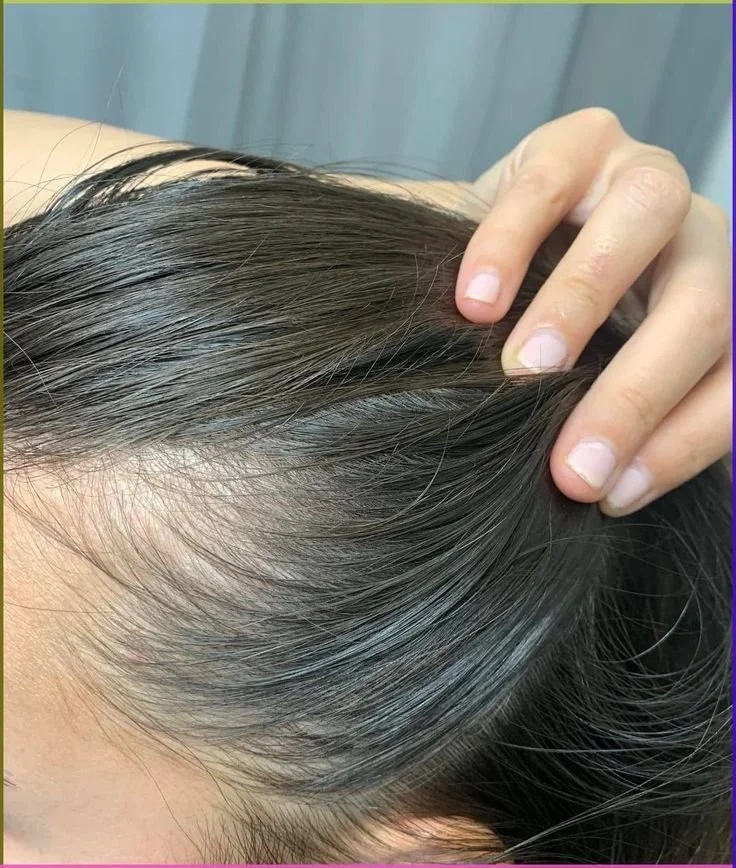
Illustrative photograph. The pattern of thinning and the scalp examination help guide a hair-loss assessment.
Hair shedding after a hormonal coil is fitted deserves a careful assessment, but the timing alone does not prove that the coil caused it. Hormonal coils release levonorgestrel, and hair loss is listed among the possible adverse effects of some products. Childbirth, illness, iron deficiency, thyroid problems and pattern hair loss can produce similar changes or occur at the same time. The useful first step is to identify the type of hair loss and review the full history before changing contraception or starting treatment. A Hair PRP session at The London PRP Clinic costs £450.
Can a hormonal coil cause hair loss?
Hair loss is a recognised possible adverse effect, but it is not an inevitable effect of using a hormonal coil. For example, Mirena's product information lists alopecia as uncommon. That is a product-specific frequency category, not proof that a particular person's shedding is caused by their device. Different hormonal coils contain different amounts of levonorgestrel, so the exact brand and its information matter.
A suspected medicine-related effect is assessed alongside other explanations. A clinician considers when the device was fitted, when shedding began, whether another contraceptive was stopped, and whether there were other physical or hormonal changes. Hair grows in cycles, so the visible change may follow a trigger by several months rather than immediately.
Your experience should be taken seriously even when the cause is uncertain. It is reasonable to discuss a possible link and available contraceptive alternatives. It is equally important not to assume that removing the coil will reverse a different hair condition or provide an immediate result.
Why does the timing sometimes mislead?
A hormonal coil may be fitted around a time when several things are changing. Examples include the months after childbirth, a change from the combined contraceptive pill, or treatment for heavy periods. These circumstances can affect the hair cycle or iron balance independently of the new device.
Telogen effluvium is increased shedding after a disruption to the normal hair cycle. The British Association of Dermatologists describes a delay of around three months after a trigger. A stressful illness, operation, substantial weight loss or childbirth earlier in the year may therefore be relevant to shedding noticed now.
This delay also affects follow-up. Hair already committed to the shedding phase does not stop falling immediately when a trigger is addressed. A short period of continued shedding does not necessarily mean that a sensible treatment plan has failed. The diagnosis and the expected timescale need to be considered together.
Shedding or pattern thinning: why the distinction matters
Telogen effluvium often causes a noticeable increase in hair coming out during washing or brushing, with reduced volume across the scalp. Female pattern hair loss is more often a gradual reduction in density over the central scalp, sometimes with a widening parting. Both can occur together, and increased shedding can make an underlying pattern more noticeable.
A smooth, distinct bald patch has a different set of possible causes. Broken hairs from traction or damage can also be mistaken for shedding from the root. Inflammatory scalp conditions may need a different approach again. The appearance and examination are more informative than trying to diagnose the problem from the number of hairs in a shower drain.
A clinician may examine the scalp closely and use magnification where appropriate. They look at the distribution, hair calibre, breakage, scalp skin and follicle openings. The aim is to identify the condition that needs care, rather than attach every change to the most recent medication or contraceptive.
What else should be considered?
Iron deficiency and thyroid disease are among the medical causes that can be considered when the history or examination supports them. Heavy menstrual bleeding, a restrictive diet, recent weight loss and symptoms such as marked tiredness can help guide the assessment. A family tendency to pattern hair loss is also relevant.
A full medication history matters, including recently started or stopped medicines and supplements. Changes in hormone treatment can affect the hair cycle. Recent pregnancy, breastfeeding, illness, surgery and major stress should be discussed without assuming that any one of them explains everything.
Irregular periods, new facial hair or other signs of increased androgen effects may prompt a more specific assessment. They do not establish polycystic ovary syndrome on their own. The right investigation depends on the overall clinical picture, not simply the presence of hair thinning.
Do I need blood tests?
Not everyone with hair loss needs the same tests. An examination and a clear history can sometimes identify the likely pattern without a broad laboratory panel. Where indicated, blood tests may help assess iron deficiency, thyroid function or another suspected underlying problem.
Testing should answer a question that will change care. There is no single blood result that proves a hormonal coil is responsible for shedding. A normal result does not exclude pattern hair loss, and a mildly abnormal vitamin level does not automatically explain all scalp changes.
Taking iron or high-dose supplements without evidence of a need is not a substitute for diagnosis. Tell the clinician what you already take, including products marketed for hair growth. A balanced diet is useful, but an extensive supplement routine should not delay assessment of progressive or distressing hair loss.
When should hair loss be assessed promptly?
Arrange an assessment if shedding is persistent, thinning is progressing or the change is affecting your wellbeing. Earlier review is particularly useful for patchy loss, a painful or inflamed scalp, marked scaling, pustules, or areas that look smooth and shiny with loss of normal follicle openings. Some inflammatory conditions can cause permanent scarring, so they should not be treated as routine hormonal shedding.
Loss of eyebrows or other body hair, significant general symptoms or rapidly changing hair patterns can also alter the assessment. Mention these rather than limiting the discussion to the coil. A scalp examination may lead to dermatology review where the diagnosis is uncertain or scarring is suspected.
Hair loss is often not an emergency, but that does not make it trivial. The emotional effect can be considerable. A good plan should explain what is known, what remains uncertain and when to review progress, rather than offer either blanket reassurance or an immediate procedure.
Should I have the coil removed?
Removal is a choice to discuss with a trained contraceptive clinician, not a decision that has to be made from the article alone. The discussion should include the device's purpose, your preference, the suspected relationship to hair changes and alternatives that suit your health and circumstances.
A coil may be used for contraception, heavy bleeding or as part of hormone replacement therapy. Removing it can therefore affect more than pregnancy prevention. If it provides the progestogen component of HRT, the wider treatment plan needs review before a change. Do not remove it yourself.
Where a change is appropriate, the clinician can plan how to do it safely. Neither continuing nor removing the coil guarantees what will happen to hair density. Treating any additional cause and allowing time for the hair cycle remain important parts of the plan.
Contraception needs planning before removal
Pregnancy can occur as soon as an IUS is removed. NHS advice is to use another method, such as condoms, starting seven days before removal if pregnancy is not wanted. The precise plan may differ when switching directly to another method, so obtain advice before the appointment rather than afterwards.
Tell the contraceptive clinician about recent sex, plans for pregnancy and any difficulty using an alternative method. These details can change the timing or precautions needed. If the coil has already been removed and you are concerned about pregnancy risk, seek prompt advice from a pharmacist, sexual health service or GP.
The copper coil contains no levonorgestrel, but it is not automatically the best alternative for someone with hair loss. It can affect bleeding, which matters if heavy periods or iron deficiency are part of the history. Choosing contraception should account for the whole person, not only one possible adverse effect.
Will hair grow back after a change?
That depends on the cause. Temporary shedding often improves after the trigger settles, but visible density takes longer to recover than the shedding itself. The British Association of Dermatologists explains that the shedding phase of telogen effluvium commonly lasts three to six months, with many further months needed to regain normal volume.
If pattern hair loss is present, removing a possible trigger does not necessarily reverse the underlying tendency. If iron deficiency, thyroid disease or an inflammatory scalp condition is contributing, that condition needs its own care. More than one process can require attention.
A review plan is more useful than a promise of regrowth by a fixed date. Photographs taken under similar lighting with the same parting can help document change over time. Daily comparisons and repeated hair counts can be hard to interpret because washing frequency and styling alter what is visible.
What treatments may be appropriate?
Treatment follows the diagnosis. Telogen effluvium often recovers without a hair-growth medicine once the trigger has passed or an underlying issue is addressed. Gentle hair care, adequate nutrition and avoiding tight styles or harsh processing can reduce additional breakage while recovery takes place.
For female pattern hair loss, topical minoxidil may be discussed where suitable. It does not work for everyone and usually needs ongoing use to maintain its benefit. Prescription options need an individual review of health, other medicines and pregnancy or breastfeeding plans. A treatment used for one form of hair loss is not automatically suitable for another.
Any prescription, investigation or contraceptive change should be agreed with the appropriate clinician, including its risks and any monitoring. A hair assessment should lead to a diagnosis-led plan, which may involve observation or another service rather than a procedure.
Where does Hair PRP fit?
PRP involves taking a blood sample, preparing a platelet-rich fraction and injecting it into the scalp. Studies of women with hair loss suggest that some groups may experience improvements in hair density or thickness. Results vary, and treatment methods, study populations and follow-up differ considerably.
Evidence about pattern hair loss does not prove that PRP reverses a coil-related adverse effect. PRP does not remove levonorgestrel, replace iron, treat thyroid disease or make a contraceptive change unnecessary. It should not be presented as a required response to new shedding after a coil is fitted.
A discussion of PRP should follow assessment of the type of loss and the condition of the scalp. The clinician should explain the likely benefit, uncertainty, possible discomfort or bleeding and the proposed treatment plan. Having a coil in place is not, by itself, evidence that PRP is either needed or unsuitable. Overall suitability still needs individual review.
What information helps at an assessment?
The useful starting point is a timeline: the coil brand and fitting date, when increased shedding or thinning became noticeable, and any contraceptive or medication changes around that period. Earlier photographs, a medication list and relevant previous results can help put the change into context.
Describe scalp symptoms and any effect on daily life. A widening parting, sudden all-over shedding, a new bald patch and hair breakage are not interchangeable descriptions. There is no need to arrive with a diagnosis or a list of tests to request; examination should guide the next step.
For clients considering Hair PRP, a clear diagnosis is especially important before committing to treatment. The appropriate outcome may be reassurance with review, treatment of another cause, a prescription discussion or specialist assessment. The value lies in matching care to the problem, not treating every concern with the same intervention.
How much does hair loss treatment cost in London?
A prescription hair foam consultation costs £95. A Hair PRP session costs £450, and Hair PRP with prescription foam costs £595. You will know the plan and the fee before any treatment begins.
Contact the team about a hair assessment after a hormonal coil.
Frequently asked questions
How common is hair loss with a hormonal coil?
The frequency depends on the product. Mirena's product information lists alopecia as uncommon, but that does not establish the cause of an individual's hair changes. Check the brand and discuss the timing alongside other possible causes rather than applying one frequency to every hormonal coil.
Does the timing prove the coil caused my shedding?
No. Hair shedding can follow a trigger by several months, and childbirth, illness, medication changes or nutritional problems may overlap with coil fitting. A clinician reviews the pattern, timeline and scalp before deciding whether a contraceptive effect is plausible.
Will removing the coil make hair return quickly?
There is no guarantee. If the coil is contributing, improvement still takes time because of the hair cycle. Other causes may also need care. Discuss removal and alternative contraception before making a change, particularly if the coil is part of HRT or controls heavy bleeding.
Is a copper coil always better for hair loss?
No. It has no levonorgestrel, but suitability depends on your medical history and bleeding pattern. Heavier bleeding can be relevant to iron balance. A contraceptive clinician can compare options without assuming that the current device explains the hair loss.
Do I need PRP for shedding after a coil?
Not automatically. Temporary shedding may recover without a procedure, and PRP evidence does not establish a specific treatment for coil-related hair loss. Assessment should identify the cause before considering whether PRP has a reasonable role in the plan.
Can I have an assessment with the coil still in place?
Yes. You do not need to remove a coil to have hair loss assessed. Keep contraception decisions separate from assumptions about treatment. If PRP or a prescription is discussed, suitability, other health conditions and pregnancy plans still need individual review.
Sources
Mirena, Summary of Product Characteristics, Health Products Regulatory Authority
British Association of Dermatologists, Telogen effluvium
Primary Care Dermatology Society, Alopecia overview
NHS, Getting a hormonal coil fitted or removed
Yuan and colleagues, PRP for female hair loss: systematic review and meta-analysis, 2024