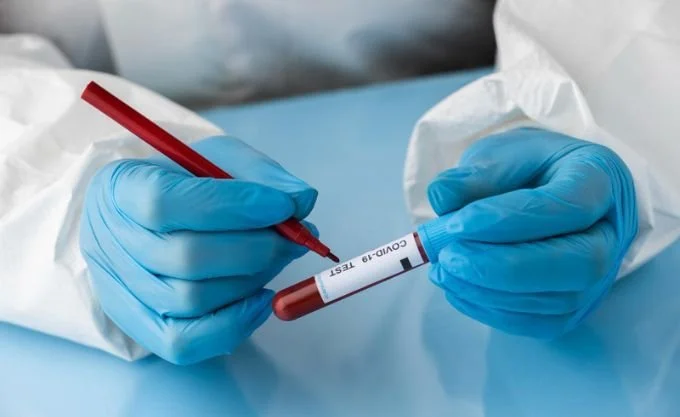
Illustrative photograph. Blood results need clinical context when liver disease affects a PRP assessment.
Liver disease does not give a simple yes or no answer about platelet-rich plasma treatment. A mildly abnormal liver result, stable fatty liver and cirrhosis with complications describe very different situations. Before PRP for a joint or tendon, the decision needs to reflect the liver diagnosis, current health, medicines and the reason for proposing an injection.
Cirrhosis deserves particular care because it can affect platelets, clotting, infection risk and the body's response to illness. A platelet count or INR result cannot settle the whole question. Equally, an abnormal result should not automatically be treated as proof that a person will bleed. The purpose of assessment is to understand the individual situation, not to clear a procedure by one number.
This article concerns an elective musculoskeletal injection in someone who has liver disease. It is not about injecting PRP into the liver, treating liver scarring with PRP, or replacing specialist liver care.
What makes cirrhosis different from an abnormal liver blood test?
Cirrhosis means that the liver has become severely scarred. It can develop through several conditions, including alcohol-related liver disease, metabolic fatty liver disease, hepatitis and autoimmune or inherited disorders. Having liver disease does not establish its cause, and an injection assessment should not make assumptions about alcohol use or lifestyle. [2,4]
The diagnosis and stage matter more than a broad label. Cambridge University Hospitals describes diagnosis through a combination of blood tests, imaging and, in selected circumstances, biopsy. That does not mean every client needs every test before PRP. It means an isolated liver enzyme result cannot provide the same information as an established clinical diagnosis and current specialist assessment. [4]
For someone with an unexplained abnormal result, clarifying its significance may be more useful than arranging an injection immediately. For someone already under liver care, the existing treatment plan and relevant records provide the starting point, without automatically repeating a complete investigation.
Why does current liver stability matter?
Some people with cirrhosis feel well for many years. Others develop complications such as fluid accumulation in the abdomen, internal bleeding, infection, confusion or kidney problems. A person who is generally stable is in a different position from someone who has recently become unwell or needed hospital treatment. [2,5]
Specialist liver guidance distinguishes compensated disease from decompensated disease, in which complications have developed. The American Association for the Study of Liver Diseases explains that acute deterioration, kidney injury and infection can alter the balance of bleeding and clotting risk. These are not details that a normal-looking injection site can rule out. [6]
An elective PRP decision should therefore reflect current health rather than a historic statement that liver disease was mild. New symptoms or a recent admission may change the timing, the information required and whether the proposed setting is appropriate. Stabilising liver-related illness takes priority over an optional injection.
Why can both bleeding and blood clots be relevant?
The liver contributes to the systems that help blood clot and to systems that limit clotting. Cirrhosis can disturb both. Platelet numbers and function may also change. The result is sometimes called a rebalanced clotting system, but rebalanced does not mean normal, predictable or protected from complications. [3,6]
This explains an apparent contradiction: a person with cirrhosis may have abnormal clotting tests and still be at risk of a blood clot. Conversely, the absence of a previous bleeding episode does not establish that every future procedure is suitable. The clinical context and the procedure itself still matter. [6]
For PRP, there is also a blood draw as well as an injection. Assessment should consider the complete procedure and the target tissue, alongside medicines, previous bleeding and current illness. These considerations support individual planning; they do not prove that PRP is either unsafe or effective for everyone with cirrhosis.
What does an INR result tell the clinician?
INR is a blood test related to clotting time. In cirrhosis, however, it does not capture all the changes in clot-promoting and clot-limiting factors. AASLD's procedural guidance states that INR alone is not a good measure of bleeding risk in this setting. [3]
It would therefore be misleading to publish one INR number as a universal permission to proceed with joint PRP, or to imply that lowering INR automatically makes a procedure safe. The same guidance cautions against routinely using plasma simply to correct a liver-related INR result before a procedure. That is a specialist treatment decision, not a preparation step for an elective injection. [3]
This discussion is about INR in liver disease. It does not replace the separate prescribing plan for someone taking warfarin or another anticoagulant. Prescribed medicines should not be stopped, reduced or rearranged to make a result look more reassuring without the treating clinician's direction.
Does a low platelet count rule out PRP?
PRP is prepared from a sample of the client's blood, so platelets are relevant both to the preparation and to the wider clinical assessment. Cirrhosis can be associated with a low platelet count, but the count needs to be understood in context rather than interpreted as an isolated pass or fail. [1,6]
The 2025 GRIIP consensus on musculoskeletal PRP recommends investigating a significant blood-count abnormality before injection. It also discusses previously investigated low platelet counts. Its recommendations are mainly expert opinion because direct evidence is limited. They should not be turned into a cirrhosis-specific clearance rule or a promise that a particular PRP preparation will work. [1]
Liver societies also differ over platelet thresholds for certain invasive procedures. AASLD notes that the evidence is insufficient for a single approach in every situation. Those procedural thresholds should not be copied into a home checklist for PRP. A stable, explained result is useful information, but liver stability, other health problems and the proposed intervention remain relevant. [3]
Does using your own blood remove the concern?
Autologous means that the PRP comes from your own blood. It does not mean the procedure bypasses the effects of liver disease, medicines or an infection. The blood sample still reflects the person's underlying biology, and drawing and injecting it still require a suitable clinical setting and careful technique.
The GRIIP consensus calls for an individual benefit-risk assessment that includes the musculoskeletal diagnosis, medical history, comorbidities and treatment alternatives. It also recommends personalised information before consent. Its scope is joint and tendon disease, not every use of PRP. [1]
Importantly, that consensus is not a trial showing that PRP is safe or beneficial specifically in people with cirrhosis. The liver-procedure sources discussed here help explain why assessment is more complex; they do not fill that evidence gap. A careful explanation should preserve that distinction rather than presenting general procedural guidance as direct PRP evidence.
What if the liver disease was caused by hepatitis?
Viral control and liver damage are related but different questions. A history of treated hepatitis does not, by itself, describe whether cirrhosis is present or whether liver function is currently stable. NHS guidance explains that cirrhosis care includes treating its cause and preventing or treating complications. [2]
The GRIIP consensus has separate recommendations for hepatitis B and C before musculoskeletal PRP. Those recommendations concern infection status and treatment history. Meeting an infection-related recommendation does not remove the need to consider liver complications, medicines and the intended injection. [1]
The review should therefore bring the information together rather than treating a reassuring viral result as complete procedural clearance. This can avoid both unnecessary exclusion based on an old diagnostic label and inappropriate reassurance when significant liver disease still needs attention.
How should medicines and alcohol advice be handled?
A current medicine list is important, including prescribed anticoagulants, antiplatelet medicines, non-prescription pain relief, supplements and herbal products. The NHS advises people with cirrhosis to check new medicines with a pharmacist or doctor because some may be unsuitable. [2]
A generic instruction to stop all painkillers, blood thinners or liver medicines before PRP would be inappropriate. Any change needs to take account of the reason for the medicine and the liver team's advice. The aftercare plan also needs to be realistic about which pain relief is suitable, rather than assuming a standard tablet will suit everyone.
Avoiding alcohol is part of cirrhosis care, not a short-term technique to qualify for an injection. The NHS also warns that suddenly stopping can be dangerous for someone who regularly drinks too much and may be dependent. Medical support is important in that situation. An elective treatment date should never become a reason to attempt unsupported withdrawal. [2,5]
Which symptoms take priority over a PRP appointment?
For someone diagnosed with cirrhosis, vomiting blood, very dark or black stools, sudden confusion or slurred speech require emergency assessment. Call 999 or go to A&E, and do not drive yourself. These are not symptoms to leave with a routine clinic enquiry while waiting for an injection appointment. [2]
New jaundice, increased breathlessness or swelling of the abdomen, legs, ankles or feet also need urgent medical advice through an urgent GP appointment or NHS 111. Severe breathing difficulty, collapse or other immediately life-threatening symptoms warrant 999. [2]
A fever or new illness should be discussed promptly with the treating medical team, particularly if there is known advanced liver disease. Infection can change the clinical picture. The injection clinician needs to know about deterioration, but contacting an elective PRP service is not a substitute for urgent liver or emergency care. [2,6]
What should a useful assessment bring together?
The most useful information is usually the confirmed liver diagnosis, relevant recent specialist correspondence, available blood results, current medicines and any recent complications or admissions. Imaging or reports about the painful joint or tendon help establish whether the proposed injection addresses the right problem.
This is not a requirement for every client to arrange an identical set of new tests. The reviewing clinician should identify which unresolved facts could change the decision and whether advice from the existing liver team is needed. Neither a fixed blood-test package nor a particular specialist arrangement should be assumed from a general article.
The outcome may be to consider PRP, obtain further information, defer treatment or choose another approach. If an injection is considered, the plan should explain the expected benefit, uncertainty, procedure-specific risks, suitable aftercare and how any complication would be assessed. This is the individual approach supported by the PRP consensus and liver-procedure guidance. [1,3,6]
Is PRP still the right treatment for the joint or tendon?
Medical suitability and likely benefit are separate decisions. Even when liver disease is stable, PRP is not automatically the best option for pain. The diagnosis, severity, previous rehabilitation, daily limitations and evidence for that particular joint or tendon still need consideration. The GRIIP consensus explicitly places the indication and alternatives within the benefit-risk assessment. [1]
Equally, finding PRP unsuitable should not leave the original pain without a plan. Care may need to focus on rehabilitation, another diagnosis or a different treatment, with medicine choices adapted to the liver condition. No general article can select that treatment safely for an individual.
At The Wellness, an enquiry about joint or tendon PRP can begin with the condition being considered and the relevant liver history. The aim is a clear suitability discussion before any commitment to a course, not an assurance that one result will guarantee treatment. General information cannot replace an individual assessment or the advice of the treating liver team.
Discuss a joint or tendon PRP assessment with The Wellness
Frequently asked questions
Can I have PRP if I have cirrhosis?
There is no blanket answer. Current liver stability, complications, medicines and the joint or tendon diagnosis all matter. General procedural guidance is not proof of PRP safety in cirrhosis. Individual review may lead to further information, deferral or a different treatment.
Does a raised INR mean I will bleed during PRP?
Not necessarily. In cirrhosis, INR alone does not describe the whole clotting balance. It should not be used as a stand-alone clearance test either. Anticoagulant treatment requires its own prescribing plan; do not alter it yourself. [3,6]
Will a normal platelet count make PRP suitable?
A platelet count is only one part of assessment. Liver stability, infection, other illnesses, medicines and likely benefit still matter. No single result guarantees that a joint or tendon injection is appropriate, or that PRP will improve symptoms.
Should I stop my liver medicines or painkillers beforehand?
Do not make changes on the basis of a general PRP preparation list. The prescriber and injection clinician need to agree any necessary adjustment, including suitable pain relief. People with cirrhosis should check new non-prescription or herbal medicines with a doctor or pharmacist. [2]
Does treated hepatitis mean the liver assessment is complete?
No. Viral status and liver damage are different questions. Treating the infection does not describe the current stage of any cirrhosis or exclude complications. Relevant liver history remains important even when hepatitis treatment has been completed. [1,2]
Is PRP being suggested as a treatment for liver disease?
No. This article discusses joint or tendon PRP in a person who has liver disease. It does not recommend PRP for liver scarring or replace cirrhosis treatment, surveillance or specialist follow-up. Its suitability discussion is limited to musculoskeletal injections.
Sources
Eymard and colleagues, 2025 GRIIP consensus on PRP and comorbidities
AASLD, Peri-Procedural Management of Bleeding Risk in Cirrhosis
Cambridge University Hospitals, Cirrhosis